Description
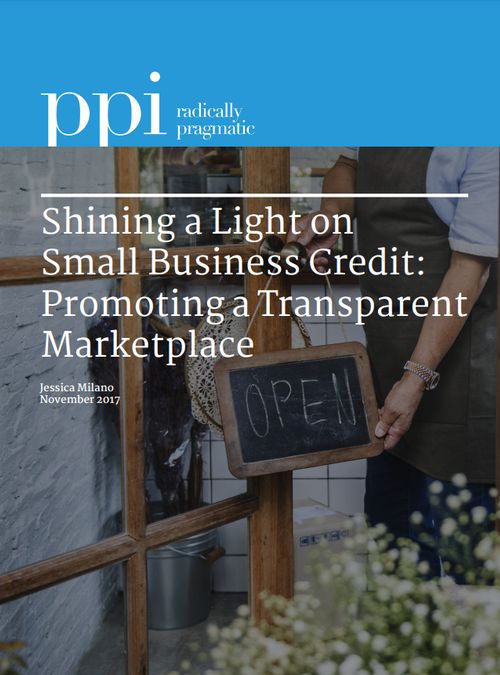
While banks have historically provided the majority of small business credit in the United States, and still do, there’s a hitch: Small business lending has high fixed costs relative to the returns banks can expect from their loans. This decline in profitability has meant a widening small business credit gap – even during an economic recovery.
Into the breach have stepped a host of companies hoping to leverage advancements in technology and the proliferation of data about small businesses to lower the cost of extending credit. As more small businesses utilize internet-based services for shipping, ordering, or record-keeping; make or accept digital payments; and engage with social media, they are creating large, real-time datasets about their businesses that can be applied to credit underwriting. These developments are encouraging many new companies – or, in some cases, established companies with no history of extending credit – to begin offering small business financing products, often without the regulatory oversight and supervision applied to banks.
Since federal consumer financial laws apply only to consumer loans, when a loan of similar size is obtained for business purposes, the lender is under no obligation to disclose standardized information about the product despite what are often comparable levels of borrower financial sophistication. Put simply, if a borrower takes out a loan as a consumer, he or she is protected. The same borrower seeking to expand his or her small business is not.