Description
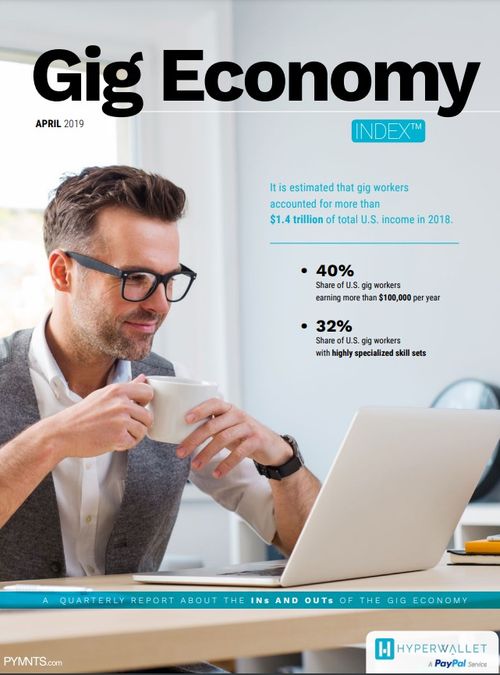
The share of workers with highly specialized skills grew to 32.3% in Q4 2018, representing a 12.2% increase over the previous quarter. This growth is occurring as more professionals in business, management, and finance begin seeking gig projects.
At the same time, the share of gig economy workers with non-specific skills decreased by 9.0%, falling from 37.8% in Q3 2018 to 34.4% in Q4. According to expert findings, fewer people are seeking gig work for its flexibility, and more are doing so to gain the opportunity to work full-time and earn higher incomes. In fact, the share of workers engaged in gig contracts earning more than $100,000 annually grew from 30.0% in Q3 2018 to 40.0% in Q4.
It is estimated that in 2018, gig workers accounted for more than $1.4 trillion in total income in the United States.
In Q4, approximately $1.4 trillion was paid out to workers engaged in gig projects, both on digital platforms and beyond, but how exactly do such markets affect their payments and expenses? More importantly, what role do they play in the gig projects that workers undertake?
PYMNTS, in collaboration with PayPal’s Hyperwallet service, sought to answer these questions in the Gig Economy Index report. The companies surveyed more than 10,000 professionals in the United States, approximately 3,000 of whom were working on gig contracts, and analyzed their responses to understand the role these projects play in their lives, defining “gig” as any type of specialized work, regardless of where or how it was found. This edition focuses on changes that occurred between Q3 and Q4 2018.
The study found that the structure of the gig economy is changing in four main ways:
Record employment levels are changing in composition
In Q4 2018, there were more highly skilled workers and fewer non-specialists than ever before. There has been an increase in workers requiring very specific skills to perform their work, and a corresponding rise in digital marketplace usage. Nearly one-third were engaged in jobs requiring “very specific” skills in Q4 2018—a record high, while the share requiring non-specific skills declined.
Changing demographics of gig workers led to fewer people seeking seasonal gig projects
The share of those seeking seasonal work fell from 35.6% in Q3 2018 to 32.6% in Q4, as did the share of those working to accumulate funds for living needs, support hobbies, pay bills, or develop skills.
Digital marketplaces continued to play a crucial role for skilled career workers
The share of workers who both work seasonally and use digital marketplaces fell from 27.1% in Q3 2018 to 16.4% in Q4, but this number increased for those who both work non-seasonally and use marketplaces, rising from 35.1% to 38.4% over the same time period. Non-seasonal workers who use digital marketplaces were also more educated in Q4—another possible indicator of their changing composition. The share of people with high school education (37.3%), college (41.6%), and graduate education (37.6%) reached a maximum.
PayPal and direct deposit usage rates are rising, while paper check popularity is declining
At 39.5%, PayPal was the most common compensation tool for workers in Q3 2018, and its popularity only increased in Q4 (41.9%). As its popularity continues to grow, the popularity of paper checks is declining. Checks are currently the fourth most common way for gig workers to receive compensation, with usage dropping to 36.7% in Q4 2018.