Description
The image of sub-Saharan Africa historically has largely been that of a poor region subject to frequent famines and conflicts, but it is viewed today as a rapidly urbanizing region with rising per capita incomes. It ranks second in population growth in the world and boasts 16 of the 29 economies projected to grow the fastest during 2012–2014. Rising world food prices have renewed interest in its potential to meet the world’s demand for food and fibre. Structural reforms and improved governance have sparked foreign investments, and some countries are now able to borrow on favorable terms in world capital markets. The telecom sector has especially captured considerable attention, as it has helped leapfrog some of the region’s well-known transportation and communication constraints and spawned widespread innovation in finance.
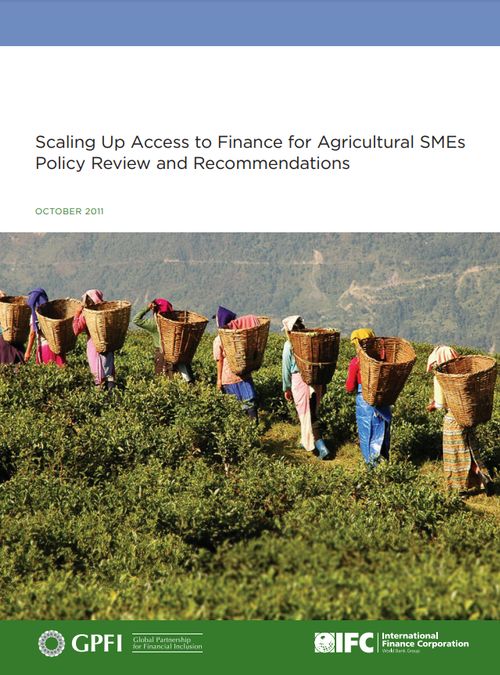
Access to banking and financial services has improved but continues to be troublesome, especially for farmers, rural people, the poor, and women. Most Africans have limited access to commercial banks. There is an average of just 6.8 commercial bank branches per 100,000 adults, and many countries have considerably fewer branches, including Malawi, Tanzania, Ethiopia, the Democratic Republic of Congo, and Sierra Leone (Ardic et al., 2013). Microfinance institutions (MFIs) supply financial services to the poor, but do not yet reach most enterprises and poor households in semi-urban and rural areas where bank branches are sparse. Member-owned financial institutions are important in mobilizing savings, but many are small, suffer governance problems, are slow to modernize, and serve few rural households. As a result, financial services continue to be identified as major constraints for agriculture. Policies designed to ease constraints are widely viewed as ineffective or too slow, especially for smallholder farmers.