Description
Smaller firms aren’t necessarily riskier – they’re just harder to score. And without trusted data, too many lending decisions default to “no.”
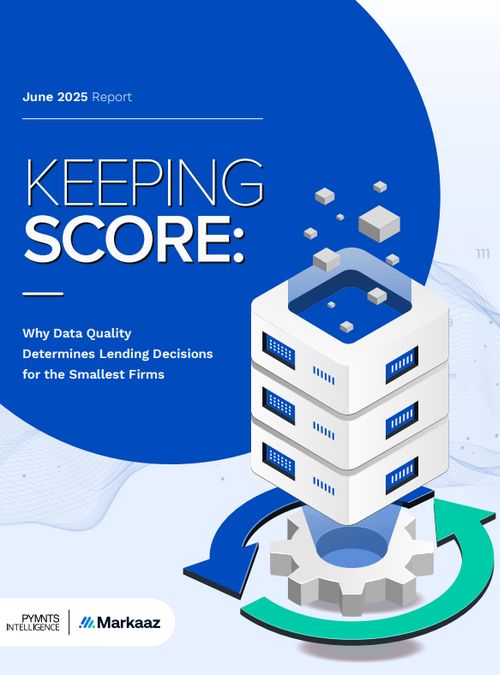
In “Keeping Score: Why Data Quality Determines Lending Decisions,” a PYMNTS Intelligence and Markaaz collaboration, we surveyed 350 financial institution executives in the U.S. and U.K. to understand what kinds of data banks need to underwrite small to mid-sized businesses (SMBs) confidently – and what’s still missing.
Inside “Keeping Score: Why Data Quality Determines Lending Decisions”:
- Nearly 3 in 4 lenders say better credit assessments would improve risk-adjusted returns. Yet only a minority call SMB lending profitable, especially for micro-businesses. The disconnect comes down to data: banks can’t price what they can’t verify.
- Fifty-seven percent of institutions cite inaccurate or incomplete records as the top barrier to underwriting small businesses. Others say the data is outdated or unverifiable. These aren’t edge cases — they’re systemwide failures.
- Six in 10 U.S. banks want real-time third-party data access. But only about half want full integration of that data into their systems. The gap shows the real priority: speed over infrastructure. Actionable data now beats perfect architecture later.
These findings indicate a clear market signal: Underwriting decisions — and profitability — depend on reliable, timely data from third-party sources.
Download the report to learn how SMB credit underwriting can evolve to meet lender needs and small business demand.